Aleš Veselý / Kosmické vztahy
Etcetera Gallery, Prague
15. 6. – 15. 7. 2022
Curated by Miroslav Jiřele & Martina Mrázová
Photo Vladimír KIVA Novotný
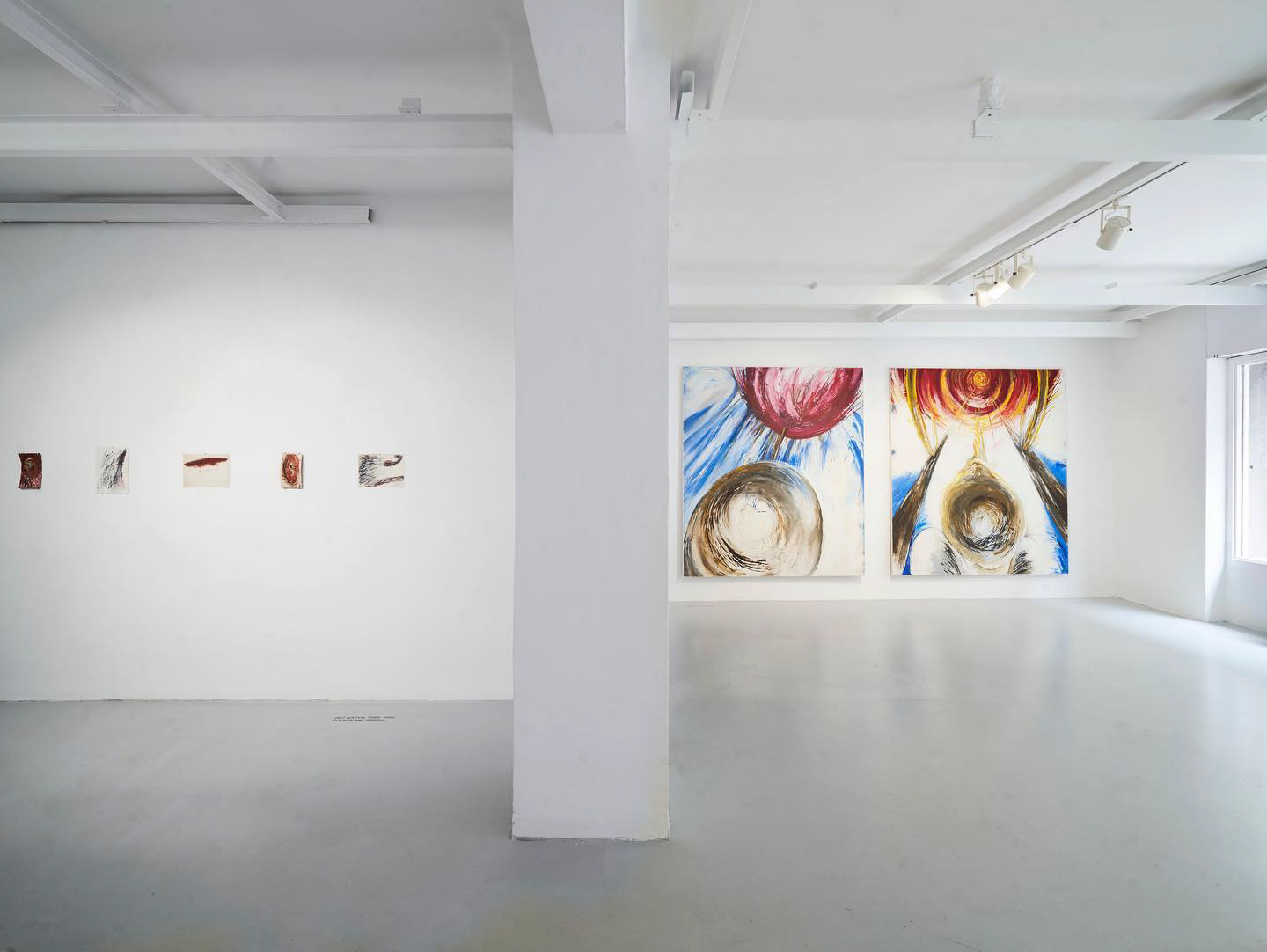
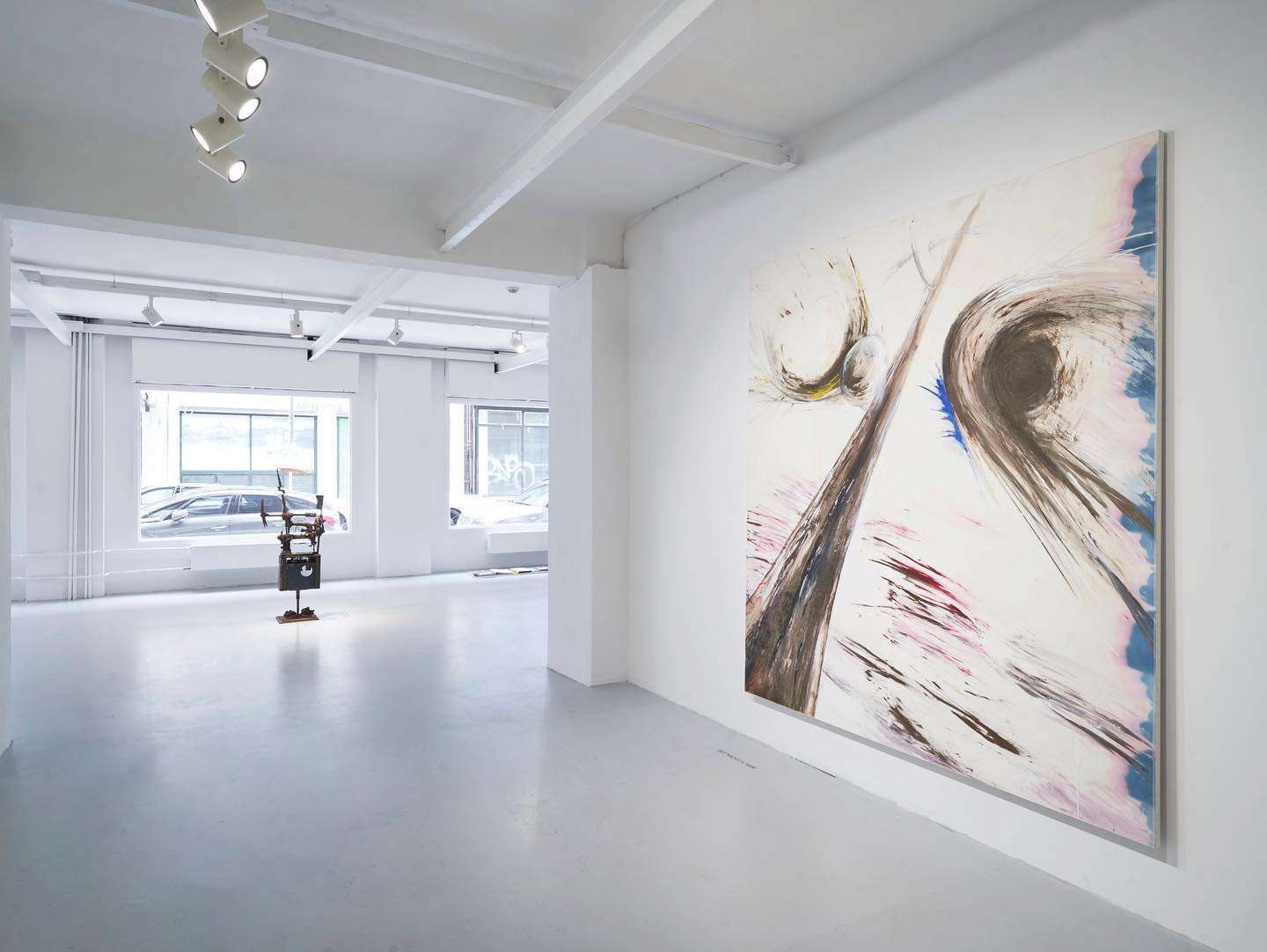
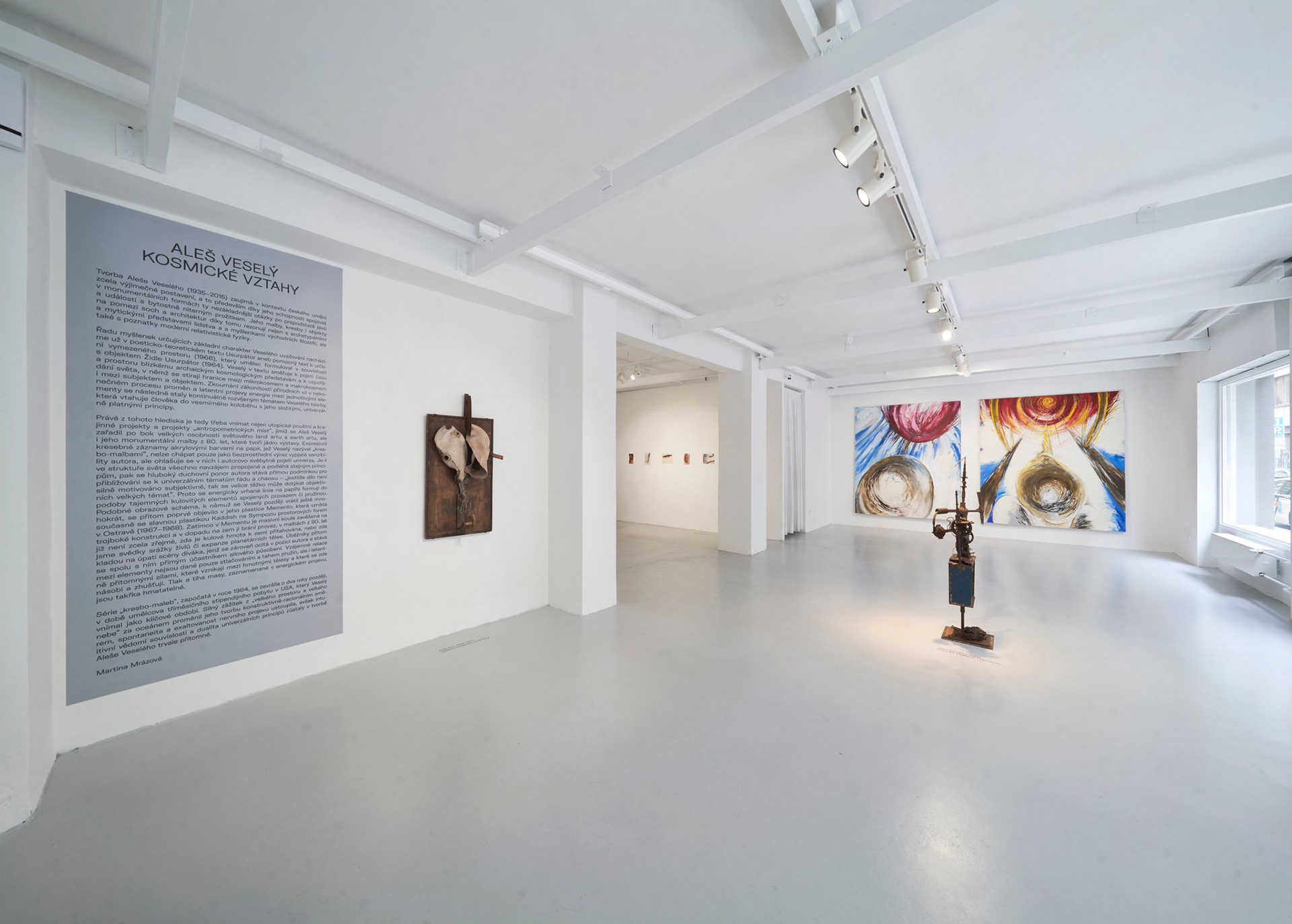
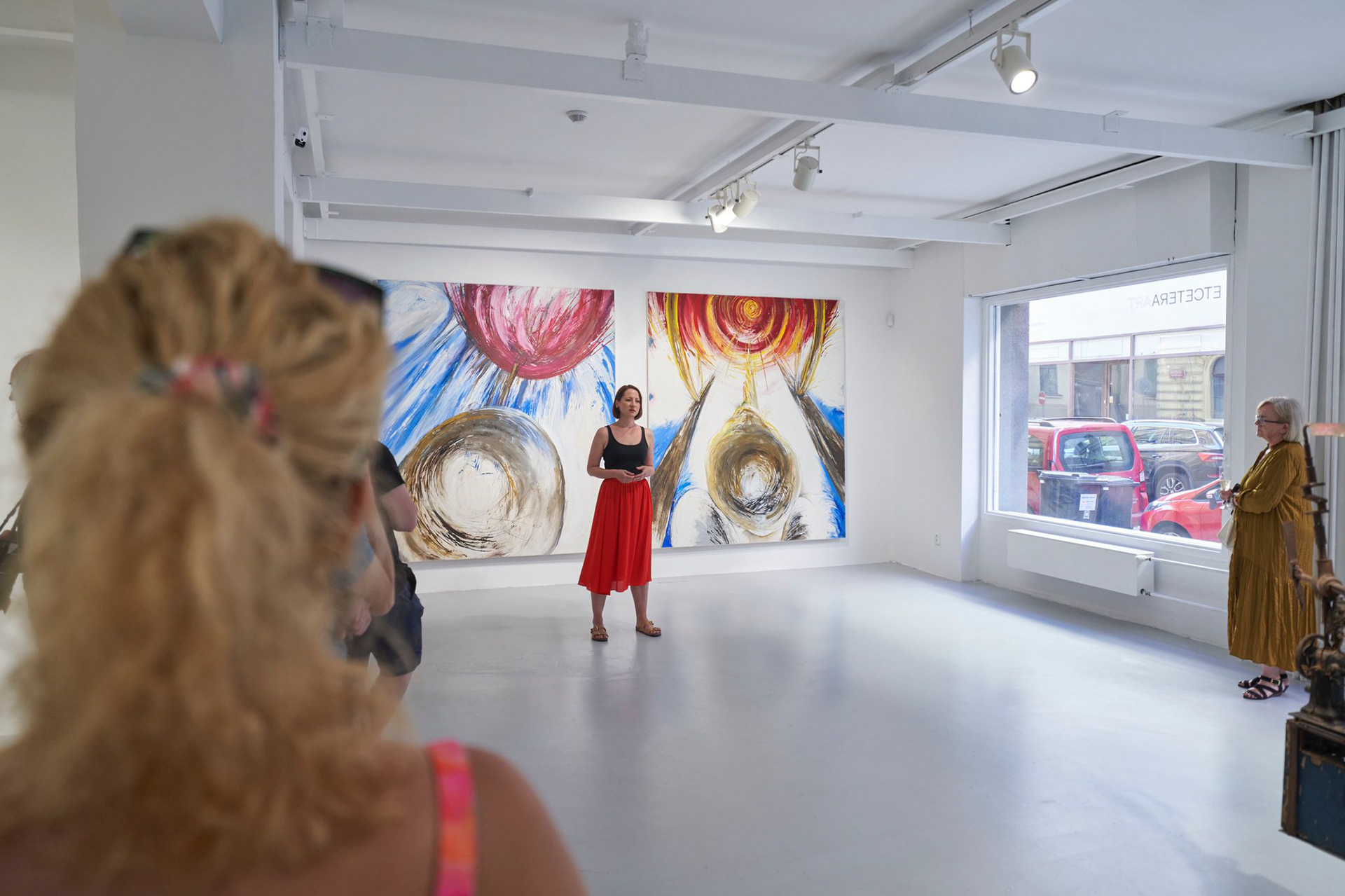
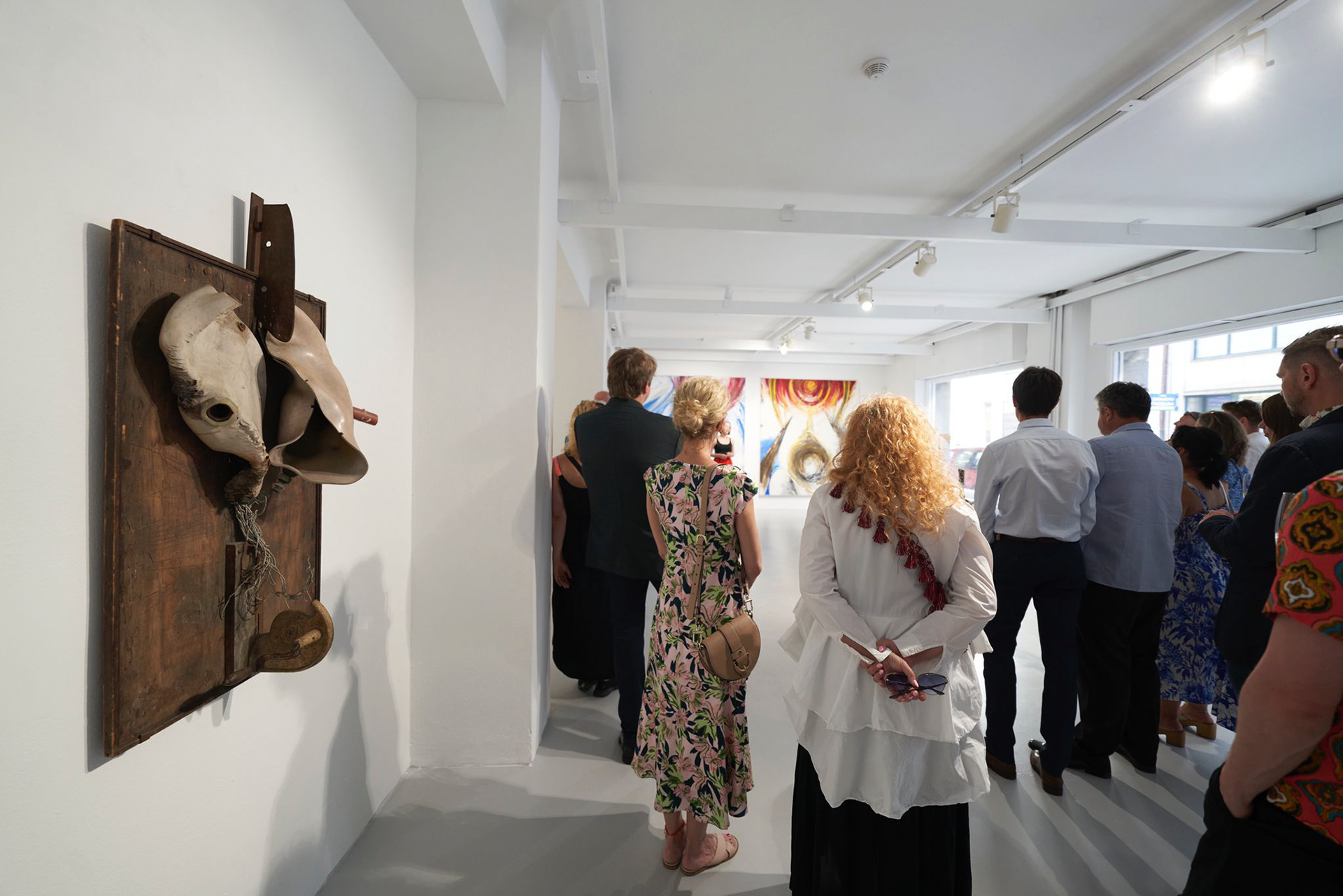
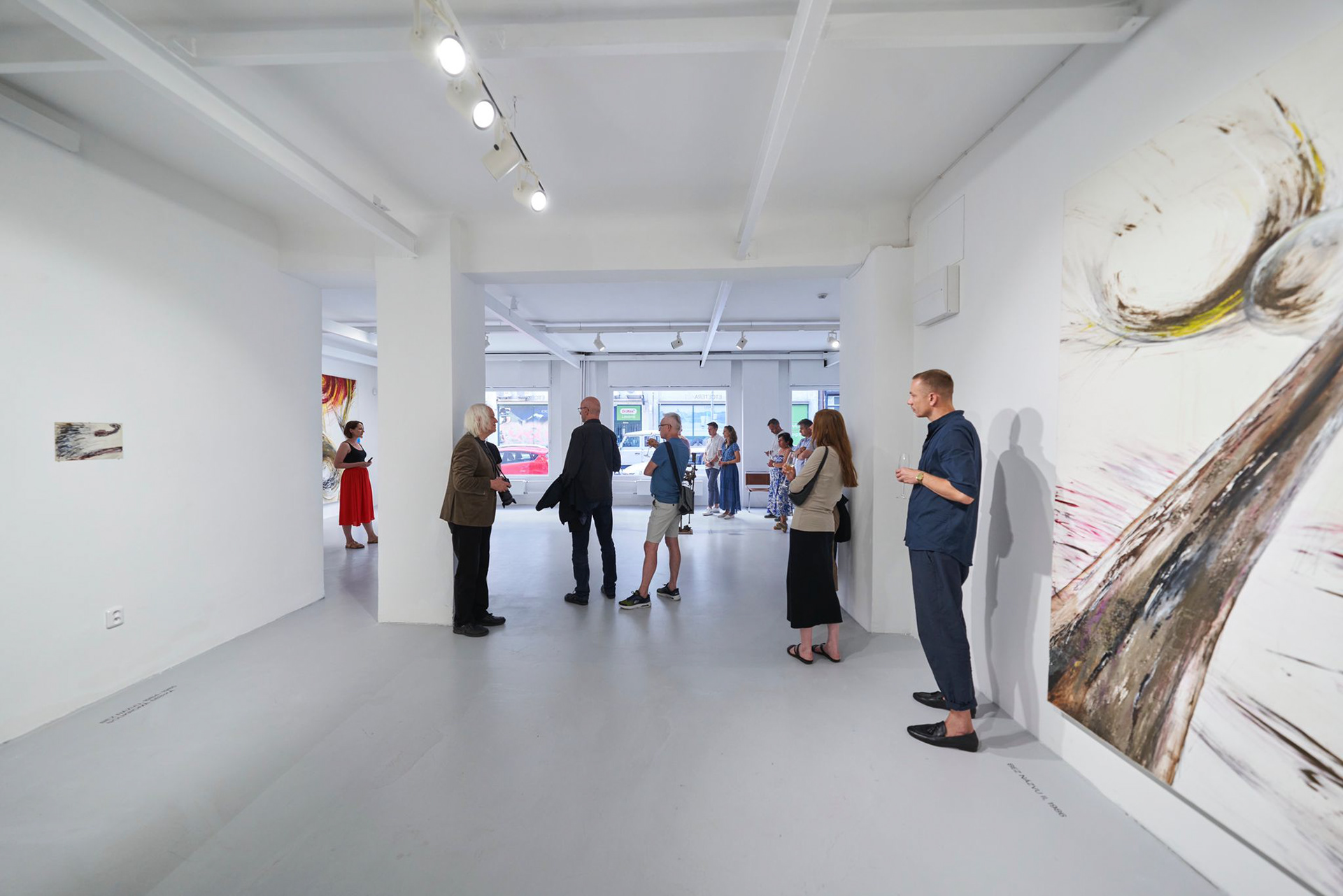
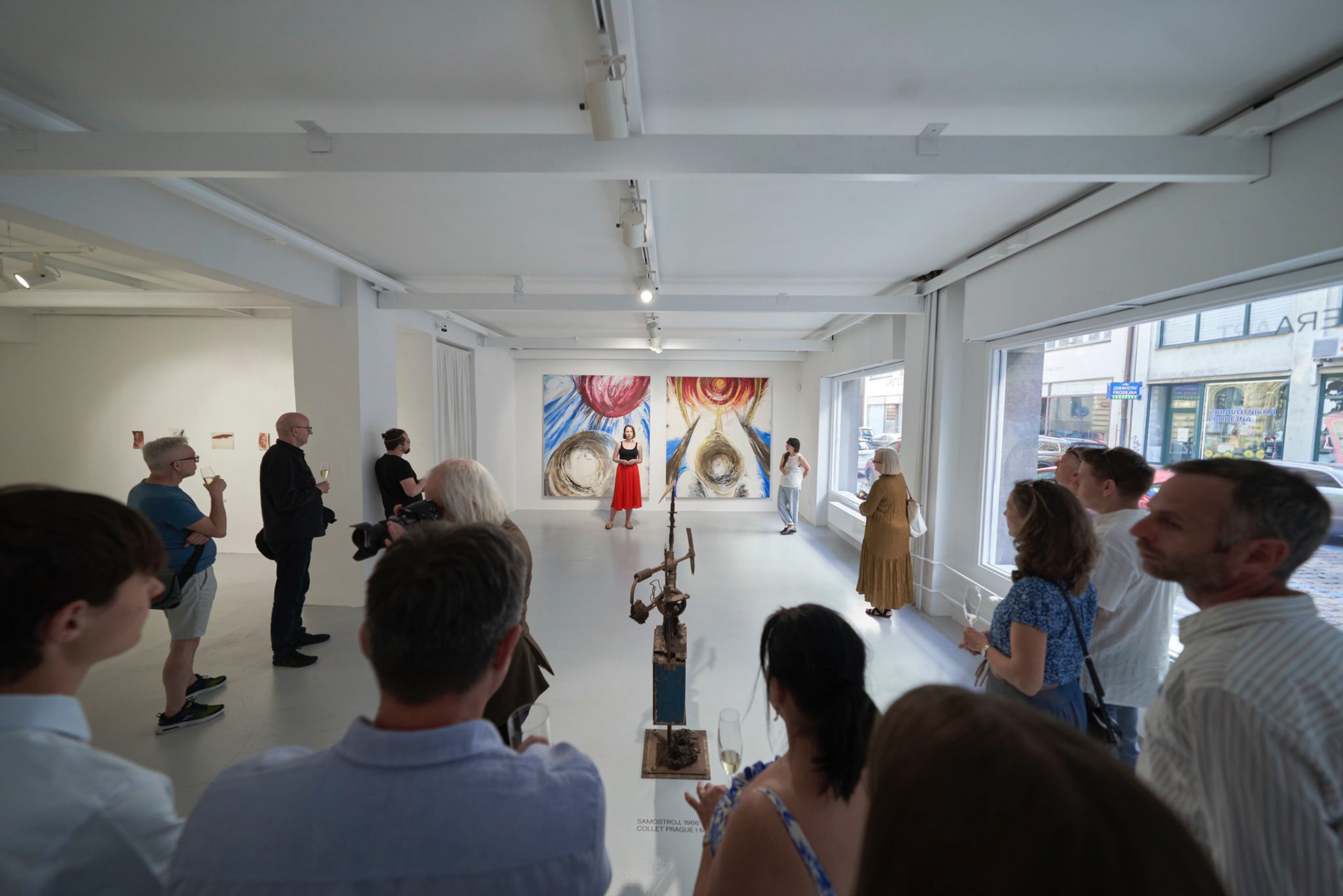
Tvorba Aleše Veselého (1935–2015) zaujímá v kontextu českého umění zcela výjimečné postavení, a to především díky jeho schopnosti spojovat v monumentálních formách ty nezákladnější otázky po prapodstatě jevů a událostí s bytostně niterným prožitkem. Jeho malby, kresby i objekty na pomezí soch a architektur díky tomu rezonují nejen s archetypálními a mytickými představami lidstva a s myšlenkami východních filozofií, ale také s poznatky moderní relativistické fyziky.
Řadu myšlenek určujících základní charakter Veselého uvažování nacházíme už v poeticko-teoretickém textu Usurpátor aneb pomocný text k určení vymezeného prostoru (1966), který umělec formuloval v souvislosti s objektem Židle Usurpátor (1964). Veselý v textu směřuje k pojetí času a prostoru blízkému archaickým kosmologickým představám a k uspořádání světa, v němž se stírají hranice mezi mikrokosmem a makrokosmem i mezi subjektem a objektem. Zkoumání zákonitostí přírodních sil v nekonečném procesu proměn a latentní projevy energie mezi jednotlivými elementy se následně staly kontinuálně rozvíjeným tématem Veselého tvorby, která vtahuje člověka do vesmírného koloběhu s jeho složitými, univerzálně platnými principy.
Právě z tohoto hlediska je tedy třeba vnímat nejen utopické pouštní a krajinné projekty a projekty „antropometrických míst“, jimiž se Aleš Veselý zařadil po bok velkých osobností světového land artu a earth artu, ale i jeho monumentální malby z 80. let, které tvoří jádro výstavy. Expresivní kresebné záznamy akrylovými barvami na papír, jež Veselý nazýval „kresbo-malbami“, nelze chápat pouze jako bezprostřední výraz vypjaté senzibility autora, ale ohlašuje se v nich i autorovo svébytné pojetí univerza. Je-li ve struktuře světa všechno navzájem propojené a podléhá stejným principům, pak se hluboký duchovní ponor autora stává přímou podmínkou pro přibližování se k univerzálním tématům řádu a chaosu – „jestliže dílo není silně motivováno subjektivně, tak se velice těžko může dotýkat objektivních velkých témat“. Proto se energicky vrhané linie na papíře formují do podoby tajemných kulovitých elementů spojených provazem či pružinou. Podobné obrazové schéma, k němuž se Veselý později vrátil ještě mnohokrát, se přitom poprvé objevilo v jeho plastice Memento, která vznikla současně se slavnou plastikou Kaddish na Sympoziu prostorových forem v Ostravě (1967–1968). Zatímco v Mementu je masivní koule zavěšená na trojboké konstrukci a v dopadu na zem jí brání provaz, v malbách z 80. let již není zcela zřejmé, zda je kulová hmota k zemi přitahována, nebo zda jsme svědky srážky živlů či expanze planetárních těles. Úběžníky přitom kladou na úpatí scény diváka, jenž se zároveň ocitá v pozici autora a stává se spolu s ním přímým účastníkem silového působení. Vzájemné relace mezi elementy nejsou dané pouze stlačováním a tahem pružin, ale i latentně přítomnými silami, které vznikají mezi hmotnými tělesy a které se zde násobí a zhušťují. Tlak a tíha masy, zaznamenané v energickém projevu, jsou takřka hmatatelné.
Série „kresbo-maleb“, započatá v roce 1984, se završila o dva roky později, v době umělcova tříměsíčního stipendijního pobytu v USA, který Veselý vnímal jako klíčové období. Silný zážitek z „velkého prostoru a velkého nebe“ za oceánem proměnil jeho tvorbu konstruktivně-racionálním směrem, spontaneita a exaltovanost nervního projevu ustoupila, avšak intuitivní vědomí souvislostí a dualita univerzálních principů zůstaly v tvorbě Aleše Veselého trvale přítomné.
Martina Mrázová
The work of Aleš Veselý (1935–2015) occupies an exceptional position in the history of Czech art, above all for his ability to bring together fundamental questions about the underlying nature of phenomena and events with profoundly personal experience through monumental forms. His paintings, drawings, and objects situated between sculpture and architecture thus resonate not only with archetypal and mythological understandings of the world and ideas drawn from Eastern philosophies, but also with insights from modern relativistic physics.
Many of the ideas that shaped Veselý's artistic thinking can already be found in his poetic and theoretical text The Usurper, or an Auxiliary Text Towards the Definition of a Delimited Space (1966), written in connection with his work The Usurper Chair (1964). In this text, Veselý moves towards a conception of time and space akin to archaic cosmological thought and an understanding of the world in which the boundaries between microcosm and macrocosm, and between subject and object, become blurred. The exploration of natural forces within an endless process of transformation, together with the latent manifestations of energy between individual elements, subsequently became a recurring concern throughout his practice, drawing human existence into a cosmic cycle governed by complex, universally applicable principles.
It is from this perspective that we should approach not only Veselý's utopian desert and landscape projects and his projects for “anthropometric sites”, which place him alongside major figures of international Land Art and Earth Art, but also his monumental paintings of the 1980s, which form the core of the exhibition. These expressive works in acrylic on paper, which Veselý called “drawing-paintings”, cannot be understood merely as immediate expressions of the artist's heightened sensibility. They also reveal his distinctive conception of the universe. If everything within the structure of the world is interconnected and subject to the same principles, then the artist's profound spiritual introspection becomes a necessary condition for approaching universal questions of order and chaos: “If a work is not strongly motivated by subjective experience, it can hardly touch upon great objective themes.”
Lines forcefully drawn across the paper take shape as mysterious spherical elements connected by ropes or springs. A similar visual configuration, to which Veselý would return many times, first appeared in his sculpture Memento, created alongside the celebrated Kaddish during the Symposium of Spatial Forms in Ostrava (1967–1968). In Memento, a massive sphere hangs from a three-sided structure, held back from striking the ground by a rope. In the paintings of the 1980s, however, it is no longer clear whether the spherical mass is being drawn towards the earth or whether we are witnessing a collision of elemental forces or the expansion of planetary bodies. The perspective of these compositions places the viewer at the foot of the scene, where they simultaneously assume the artist's viewpoint and, alongside him, become directly involved in the interplay of forces.
The relationships between the elements are determined not only by the compression and tension of springs, but also by latent forces arising between material bodies, which here multiply and intensify. The pressure and weight of the mass, conveyed through the vigorous application of paint, become almost palpable.
The series of “drawing-paintings”, begun in 1984, reached its culmination two years later, during the artist's three-month fellowship in the United States, a period Veselý regarded as pivotal. His powerful experience of the “vast space and vast sky” across the Atlantic shifted his practice towards a more constructive and rational approach. The spontaneity and heightened intensity of his expressive gestures receded, yet an intuitive awareness of interconnectedness and the duality of universal principles remained enduring features of Aleš Veselý's work.
Martina Mrázová