Martin Mainer & Samuel Paučo
Etcetera Gallery, Brno
2. 6. – 31. 7. 2021
Curated by Martina Mrázová
Photo Vladimír KIVA Novotný
Martin Mainer a Samuel Paučo mají za sebou dlouhou tvůrčí historii, mezi nimi je však rozdíl celé jedné generace. Martin Mainer se na české umělecké scéně prosadil už v 80. letech, ještě jako mladý adept malby na pražské Akademii. V počátcích své tvorby měl blízko především k německým neoexpresivním malířům Neue Wilde a k italské transavantgardě, účastnil se prvních neveřejných Konfrontací a v 90. letech patřil do okruhu pražské progresivní galerie MXM. Uznání se Mainerovi dostalo už krátce po revoluci, kdy byl spolu s 12 umělci z celého světa vybrán na mezinárodní výstavu Wanderlieder v Amsterdamu a v roce 1993 se stal také jedním z prvních nositelů Ceny Jindřicha Chalupeckého. Díky tomu absolvoval tříměsíční tvůrčí pobyt v USA, během nějž navštívil hinduistického guru Ram Dasse, který Mainerovo další umělecké i duchovní směřování výrazně ovlivnil.
Do brněnského prostředí Mainer zasáhl koncem 90. let, kdy začal působit na FaVU jako vedoucí ateliéru malířství. Z jeho ateliéru vzešlo několik zajímavých umělců a mezi nimi právě i Samuel Paučo, který v Mainerově ateliéru absolvoval v roce 2011 a vzápětí se stal jeho asistentem. A jako asistent pak Mainera následoval i na Akademii výtvarných umění v Praze, kde Mainer vedl malířský ateliér až do roku 2018.
Paučo začal pravidelně vystavovat už v době svých studií. V roce 2009 byl poprvé nominovaný na ESSL Award a poté následovalo hned několik dalších ocenění nebo nominací – naposledy byl nominován na mezinárodní ocenění Strabag Artaward 2021.
Na této výstavě se Mainer a Paučo neprezentují jako profesor a jeho asistent, ale jako dva solitérní malíři, kteří mají založením své tvorby mnoho společného. Výstava je koncipovaná převážně z děl z posledních 2–3 let, tedy z doby, kdy už nepůsobí jako pedagogové ve společném ateliéru a nejsou už v tak těsném osobním kontaktu jako dříve. Přesto jim ale pořád zůstávají společná základní východiska tvorby, která spočívají ve spontánním přístupu k malbě, v expresivním projevu a ve spojování iluzivních a metailuzivních prvků a fragmentů různých sémantických vrstev, světa vizuálního, malířského, předmětného i jazykového.
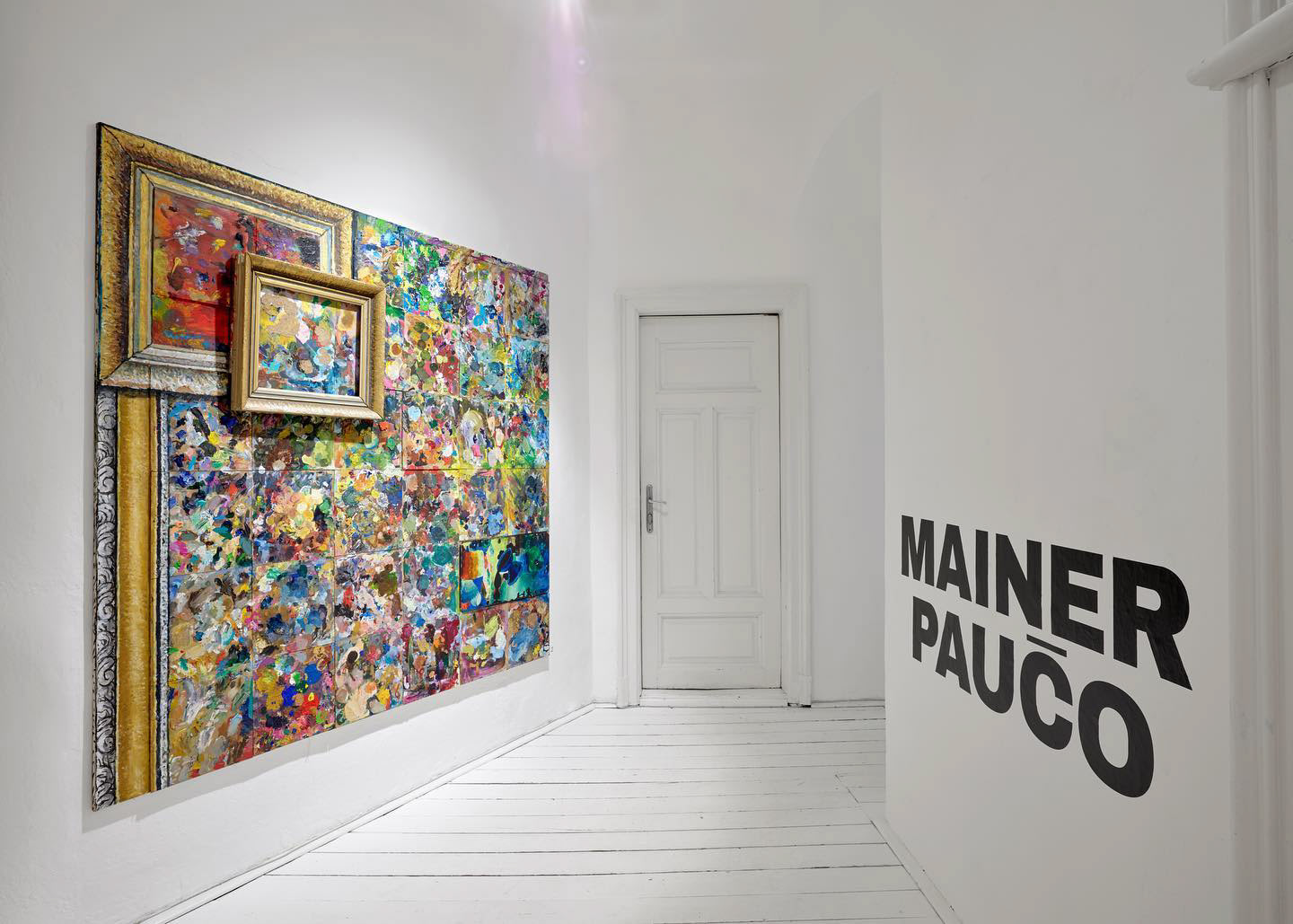
V obrazech, které vycházejí ze série nazvané Půst, Mainer vlepuje na plátno použité malířské palety studentů. Různě je kombinuje, vrství, někdy do nich i malířsky zasahuje a rozvíjí asociativní potenciál barevných skvrn, které se uplatňují částečně také reliéfně. Pracuje s abstraktními shluky barev na paletách, jež při pohledu z dálky evokují staromistrovské krajiny nebo zátiší. Prostor barevných skvrn vymezuje iluzivními rámy nebo jejich fragmenty, které naznačují neukončený výsek obrazu. Hraje si se základními atributy obrazu. Malířsky zvýznamňuje rám, jenž pro něj nepředstavuje jenom tradiční, v zásadě dekorativní způsob vymezení a uzavření malby, ale který je i součástí Mainerovy duchovní a meditativní cesty.
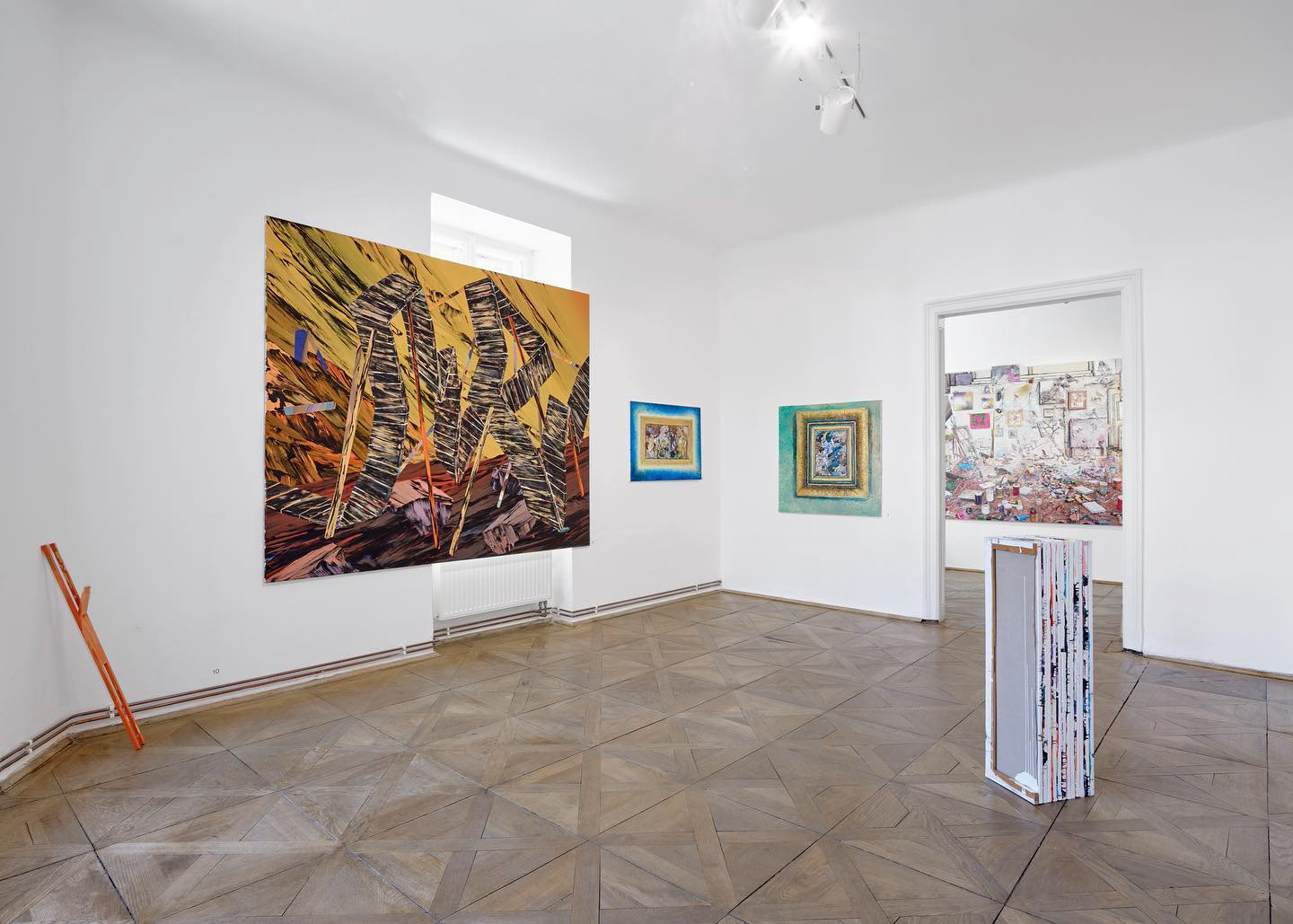
Základem Mainerova obrazu Zátiší-Minulost už nejsou malířské palety, ale fotografie vlastního obrazu v ateliéru, který zachytil v počáteční fázi malířského procesu. Tuto fotografii Mainer použil jako podmalbu pro nový obraz. Na jednu iluzi vrstvil další a další malířské iluze s mnoha symbolickými odkazy a s průhledy do prostorů dalších obrazů a volně visících pláten. Tímto způsobem vznikla série 4 obrazů, které vycházejí z Mainerova pojetí času jako věčného koloběhu, neustále unikajícího času, který malba dokáže fixovat. Namísto napětí mezi malbou a syrovou barevnou hmotou na paletách tedy tento obraz staví na napětí mezi malbou a fotografií.
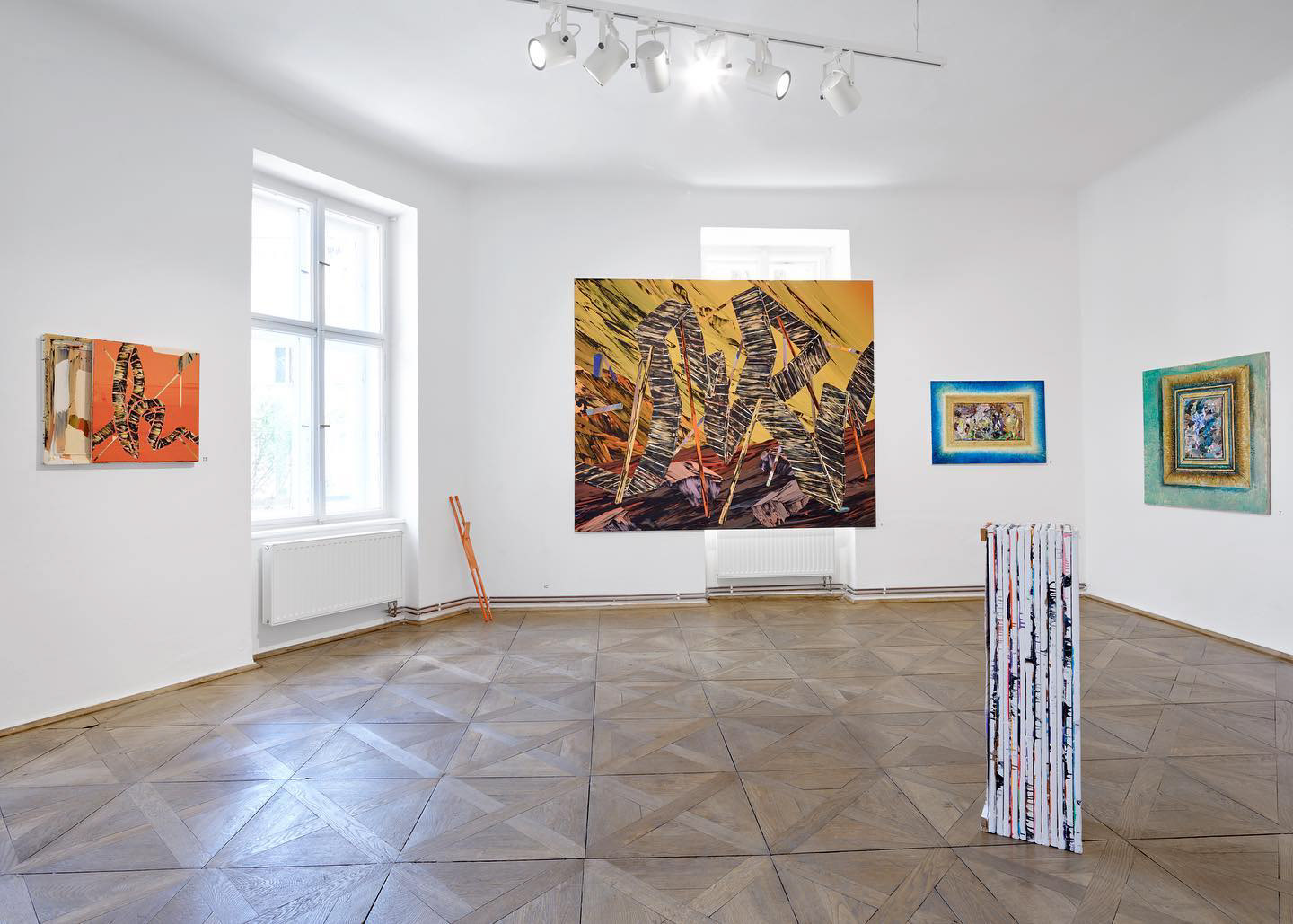
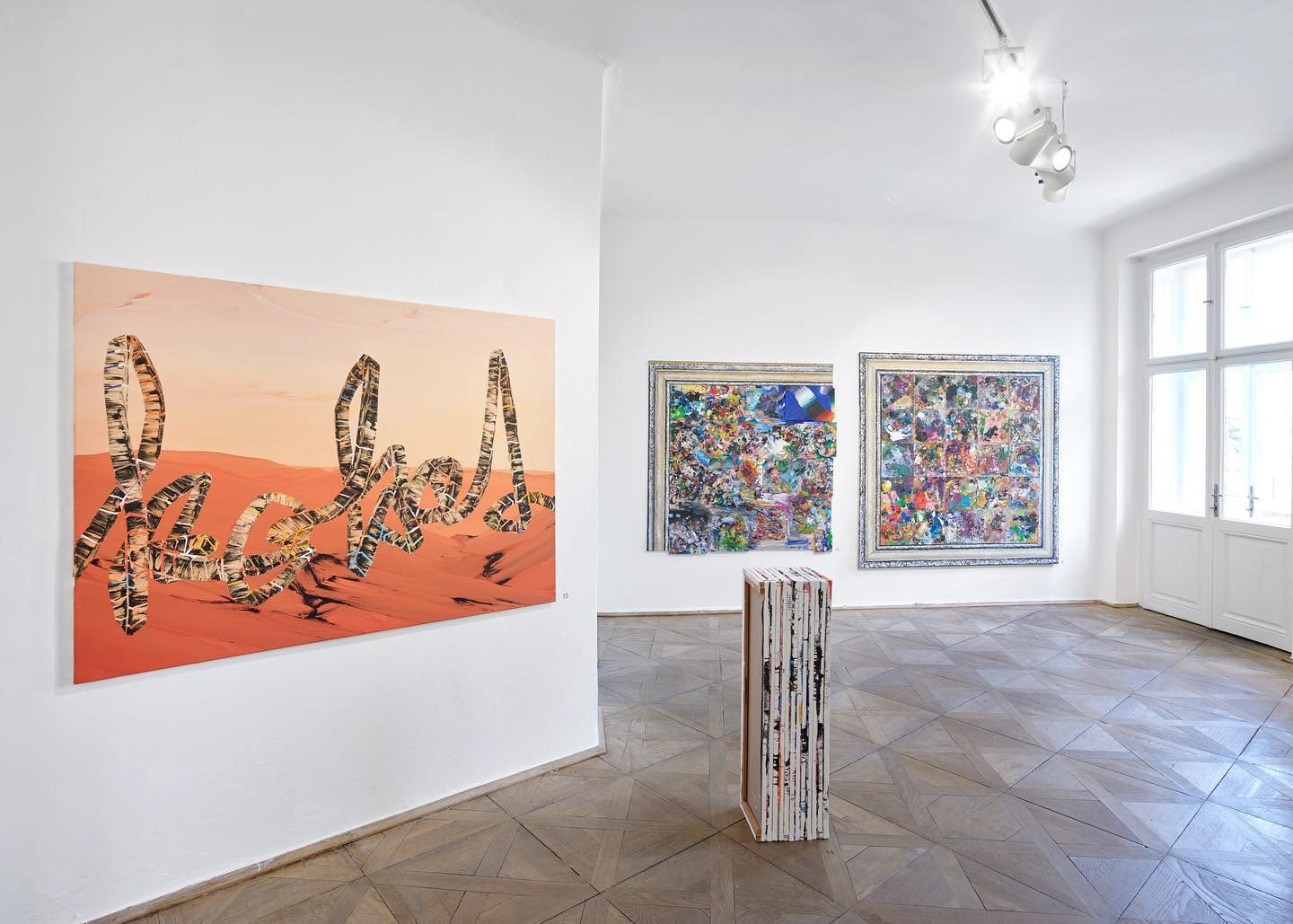
Zatímco Mainer se ohledáváním otázek podstaty malířství, toho, co dělá obraz obrazem, co je malba, jak vzniká obrazový prostor a jaká může být v obrazu role rámu, vztahuje k malířské tradici, Paučovy malby staví na intenzitě expresivního malířského gesta a na ostrém prolínání jednotlivých vrstev malby. Z fragmentů malířských vrstev formuje iluzivní prostor, jenž často evokuje nějakou záhadnou krajinu po katastrofě. Spodní vrstvy maleb se mnohdy demonstrují v podobě fragmentů dřevěné architektury nebo podvratných sémantických znaků, které někdy až romantické vyznění snových krajin s nadsázkou narušují. Podobně jako Mainer i Paučo někdy vlepuje do obrazů fotografie reálných objektů a malířskými gesty se jich zmocňuje, jako by mezi různými univerzy docházelo k souboji. Jindy se zase podivné útvary ze světa malby osamostatňují jako reliéfní či sochařské objekty.
Oba umělci se silnou malířskou intuicí tedy svým způsobem pracují s transformací abstraktních barevných skvrn do forem evokujících iluzivní zobrazení předmětného světa či jeho fragmentů. Otevírají jakési hraniční prostory, dráždivé prostory imaginace, které se nachází mezi různými myslitelnými světy.
Martina Mrázová
Martin Mainer and Samuel Paučo both have substantial artistic careers behind them, although they are separated by an entire generation. Mainer established himself on the Czech art scene as early as the 1980s, while still a young painting student at the Academy of Fine Arts in Prague. His early work was particularly close to the German Neo-Expressionist painters of the Neue Wilde movement and the Italian Transavanguardia. He participated in the first unofficial Konfrontace exhibitions and, in the 1990s, became associated with Prague's progressive MXM Gallery. Shortly after the Velvet Revolution, Mainer was selected, alongside twelve artists from around the world, for the international exhibition Wanderlieder in Amsterdam. In 1993, he also became one of the first recipients of the Jindřich Chalupecký Award. The award enabled him to undertake a three-month residency in the United States, during which he visited the spiritual teacher Ram Dass, an encounter that profoundly influenced his subsequent artistic and spiritual development.
Mainer became an influential presence on the Brno art scene in the late 1990s, when he took up a position as head of a painting studio at the Faculty of Fine Arts in Brno. Several notable artists emerged from his studio, among them Samuel Paučo, who graduated from Mainer's studio in 2011 and subsequently became his assistant. Paučo later followed Mainer to the Academy of Fine Arts in Prague, again working as his assistant, while Mainer continued to lead a painting studio there until 2018.
Paučo began exhibiting regularly while still a student. He received his first nomination for the ESSL Award in 2009, followed by several further awards and nominations, most recently a nomination for the international Strabag Artaward in 2021.
In this exhibition, Mainer and Paučo are presented not as a professor and his assistant, but as two independent painters whose artistic approaches share a number of fundamental characteristics. The exhibition consists predominantly of works produced during the preceding two or three years, a period when they were no longer teaching in the same studio and were no longer in such close personal contact as before. Nevertheless, their practices continue to share essential points of departure: a spontaneous approach to painting, an expressive visual language, and the combination of illusionistic and meta-illusionistic elements with fragments belonging to different semantic registers - the visual, painterly, material, and linguistic.
In paintings developed from his series Fasting, Mainer glues his students' used painting palettes onto the canvas. He combines and layers them in different ways, sometimes intervening directly with paint, and explores the associative potential of the colour stains, which also create a relief-like surface. He works with abstract accumulations of colour on the palettes that, viewed from a distance, evoke Old Master landscapes or still lifes. He defines these fields of colour through illusionistically painted frames or fragments of frames, suggesting an incomplete section of a larger image. In this way, Mainer plays with the fundamental attributes of painting. Through his painterly treatment, the frame acquires new significance: rather than merely serving as a traditional, essentially decorative means of defining and enclosing the image, it also becomes part of Mainer's spiritual and meditative journey.
In Mainer's painting Still Life–Past, the starting point is no longer a collection of painting palettes but a photograph of one of his own paintings in the studio, taken at an early stage of its creation. Mainer used this photograph as the underpainting for a new work. Upon one illusion he superimposed further painterly illusions, introducing numerous symbolic references and glimpses into the spaces of other paintings and freely hanging canvases. This process gave rise to a series of four paintings informed by Mainer's conception of time as an eternal cycle: time continually slipping away, yet capable of being arrested through painting. Rather than exploring the tension between painting and the raw accumulations of pigment on the palettes, this work is therefore built around the tension between painting and photography.
While Mainer engages with the tradition of painting by examining fundamental questions about the medium - what makes a painting a painting, what painting itself is, how pictorial space is constructed, and what role the frame can play within an image - Paučo's paintings rely on the intensity of expressive painterly gestures and the abrupt interpenetration of different layers of paint. From fragments of these layers, he constructs illusionistic spaces that often evoke mysterious landscapes in the aftermath of a catastrophe. The underlying layers frequently manifest themselves as fragments of wooden architecture or subversive semantic signs, playfully disrupting the almost Romantic atmosphere of these dreamlike landscapes. Like Mainer, Paučo sometimes incorporates photographs of real objects into his paintings, appropriating them through painterly gestures as though different universes were engaged in a struggle. At other times, strange formations originating in the pictorial world acquire an independent existence as reliefs or sculptural objects.
Both artists, guided by a powerful painterly intuition, thus explore, each in his own way, the transformation of abstract patches of colour into forms that evoke illusionistic representations of the material world or its fragments. Their paintings open up liminal spaces - unsettling realms of the imagination situated between different conceivable worlds.
Martina Mrázová