Bohumír Matal / Přirozený svět
Galerie Artikle, Brno
10. 7. – 15. 9. 2018
Curated by Martina Mrázová
Photo Josef Kubíček
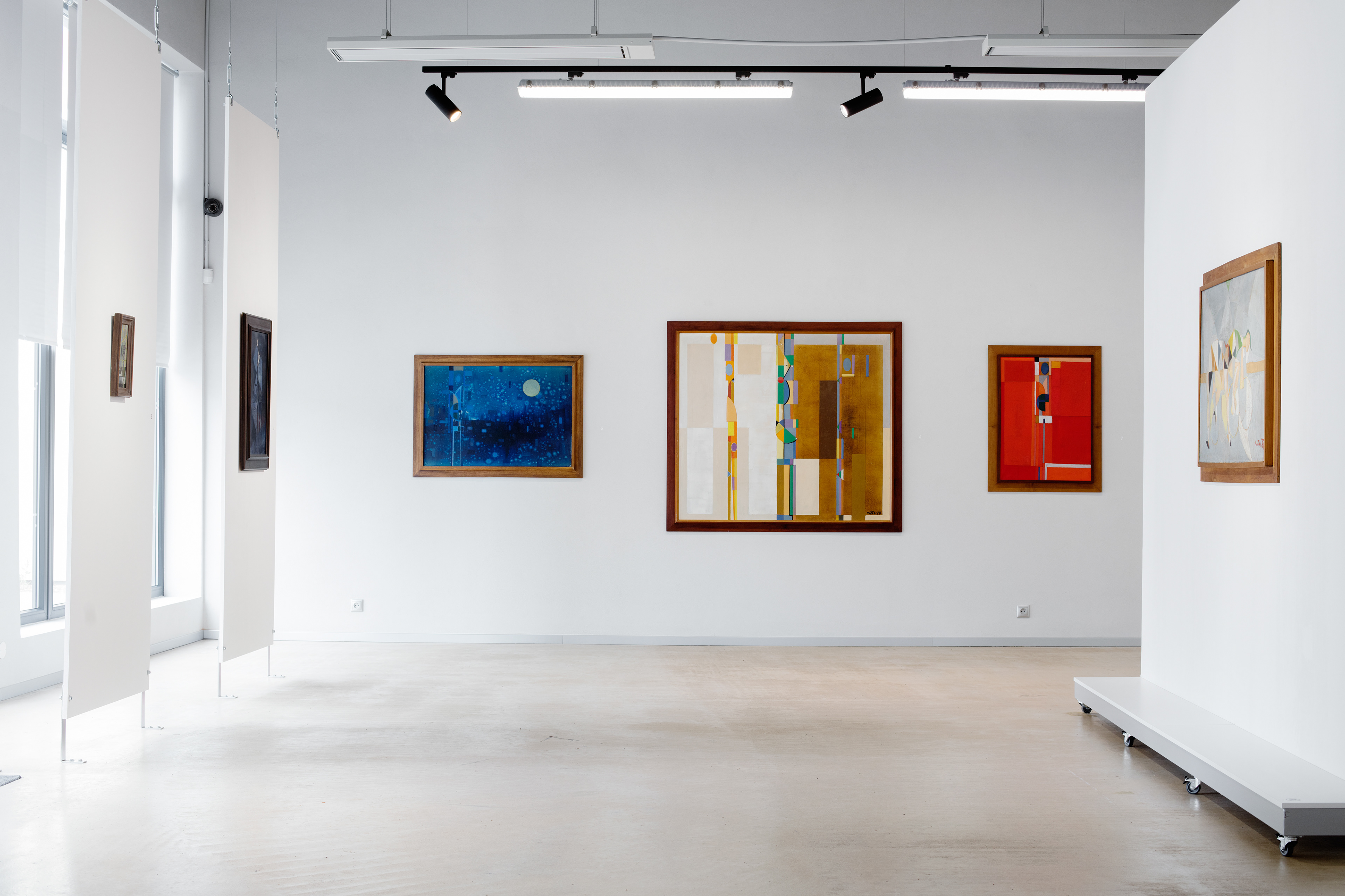
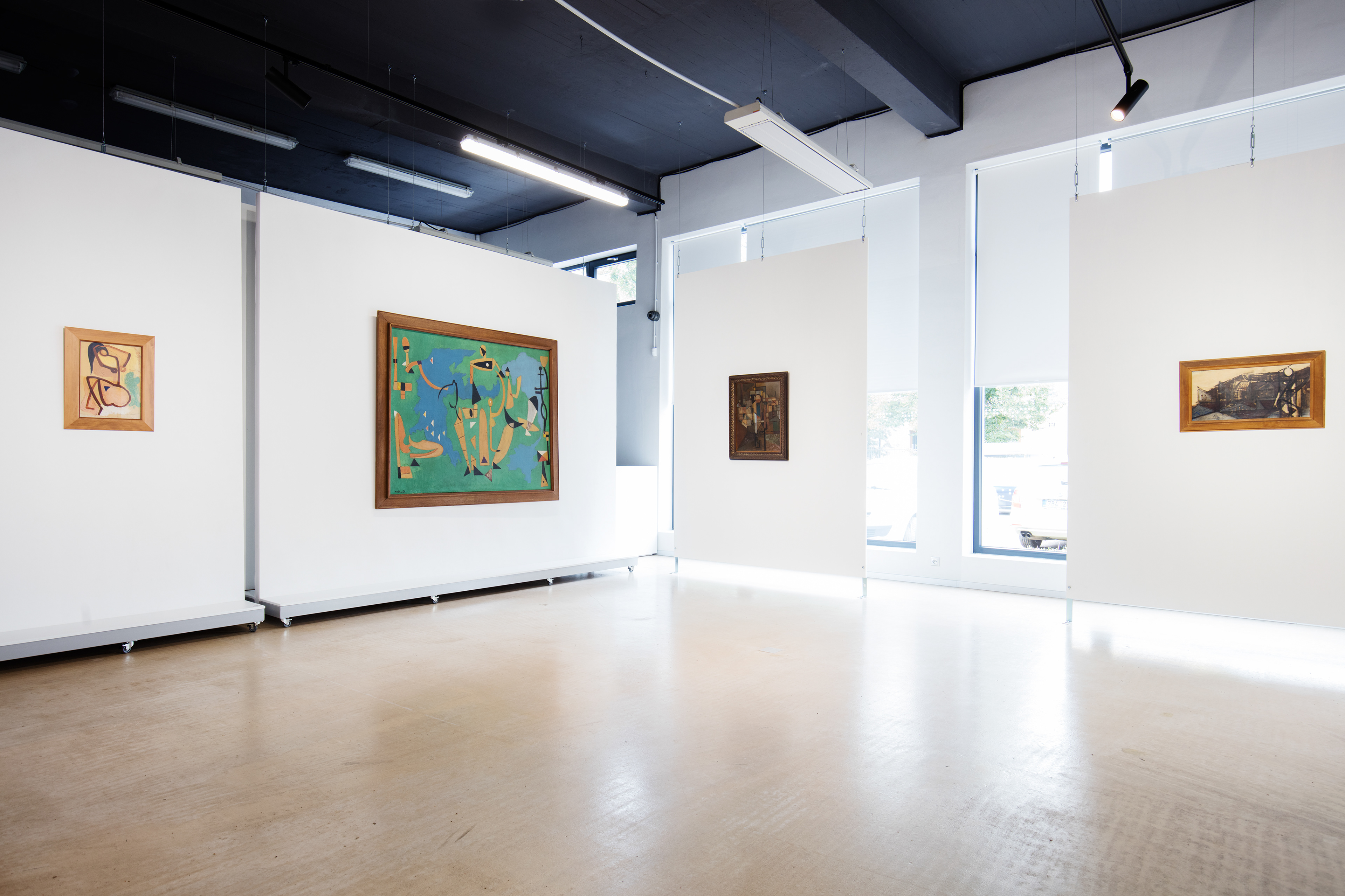
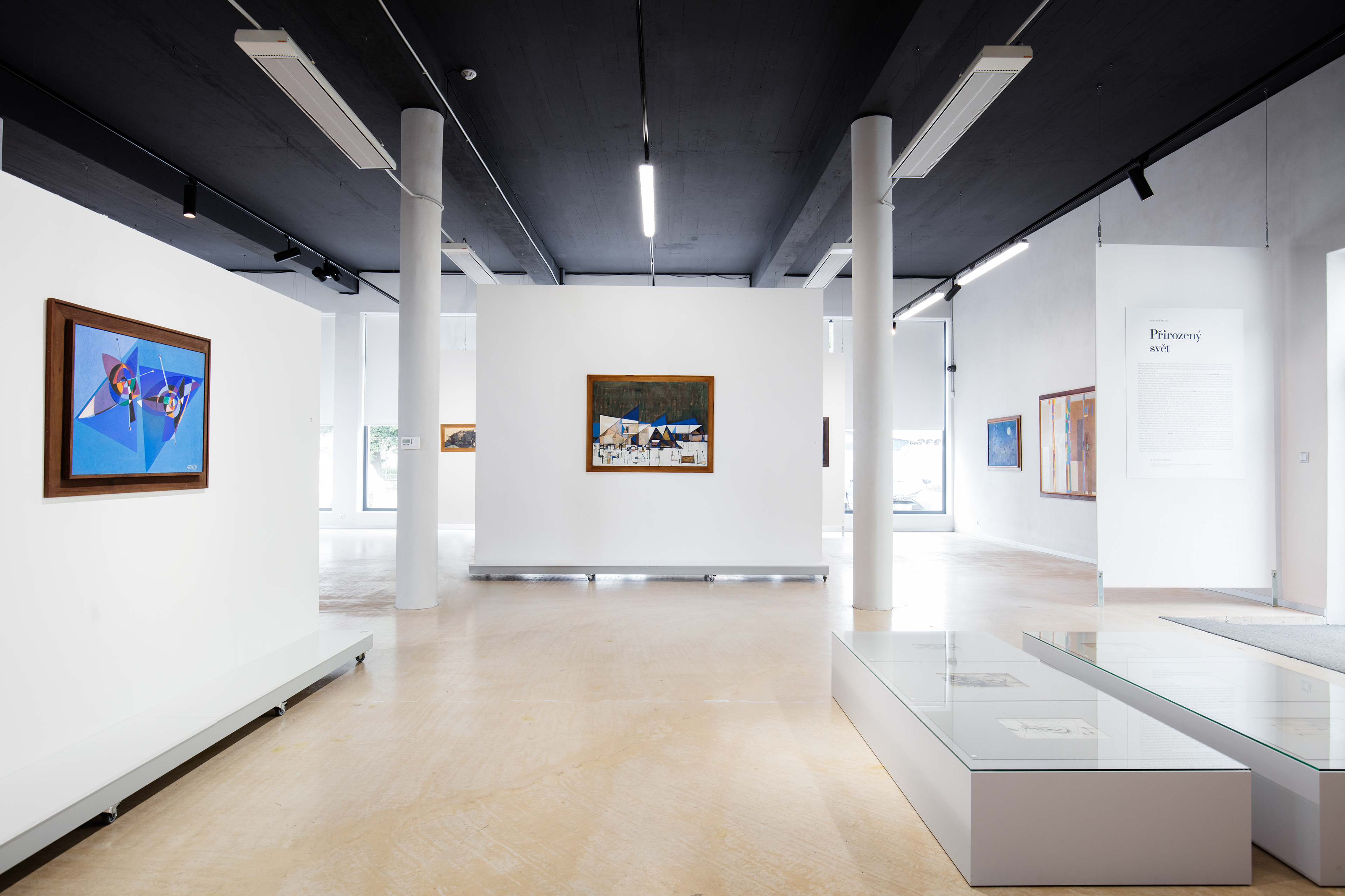
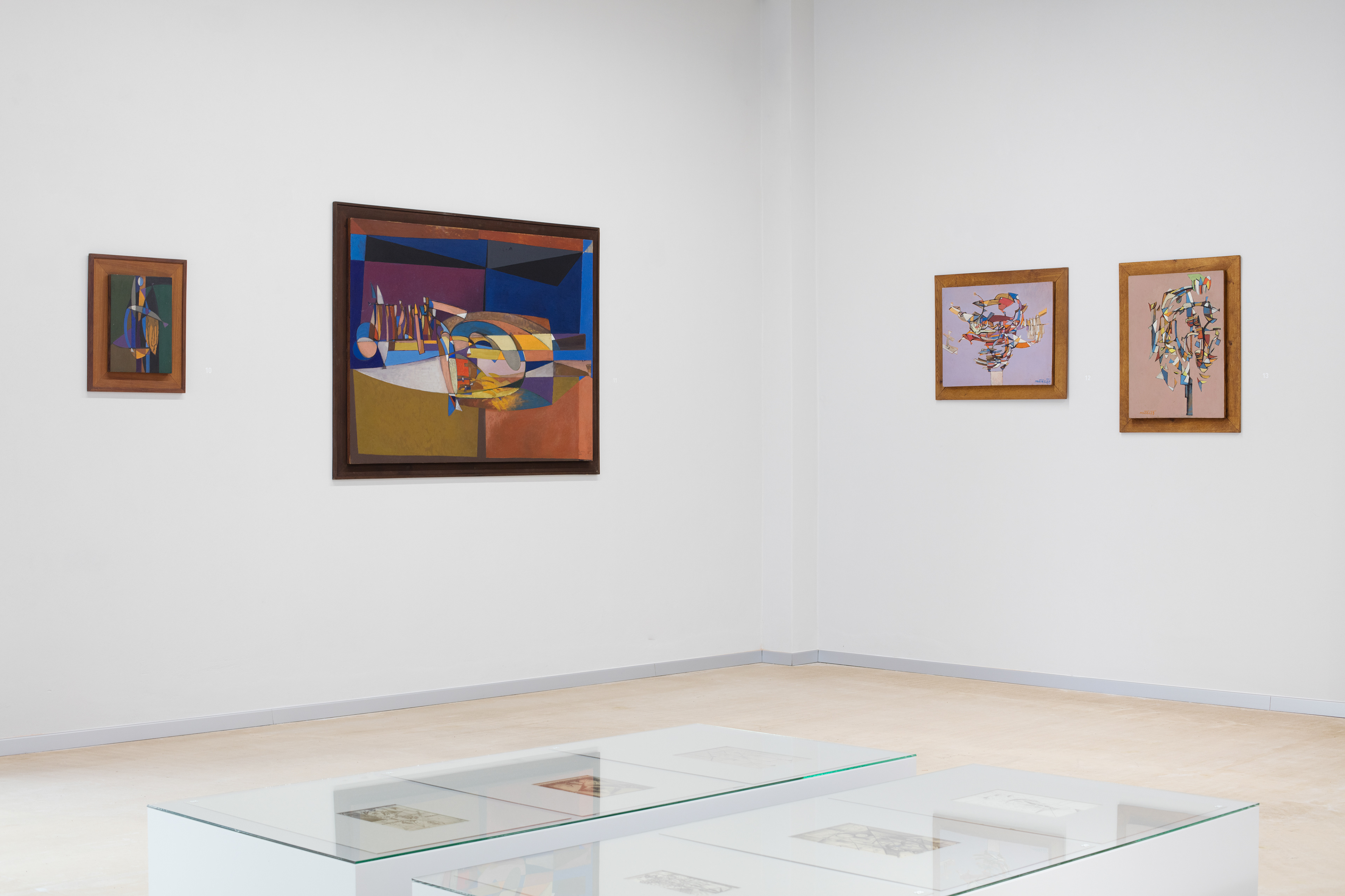
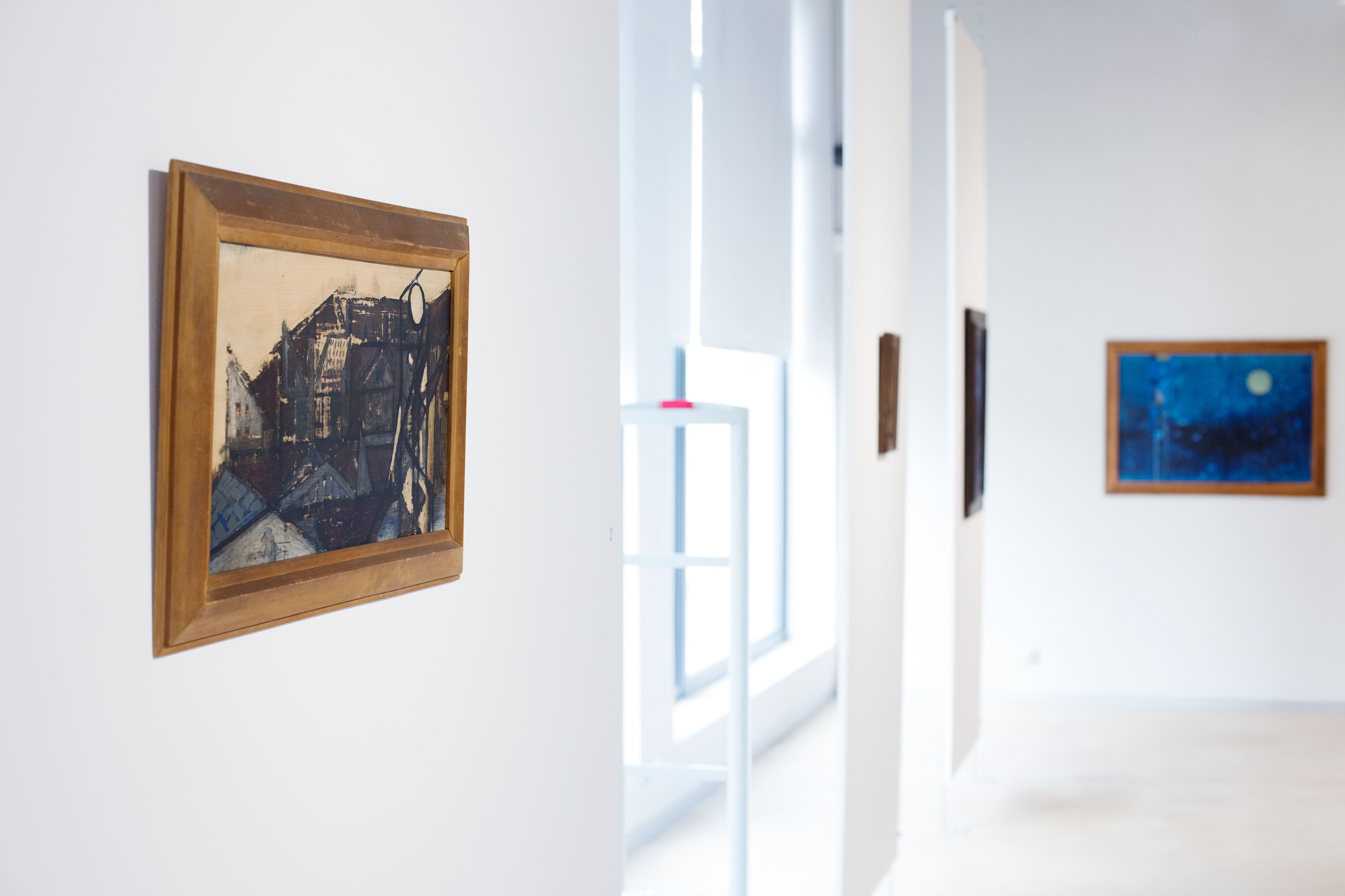
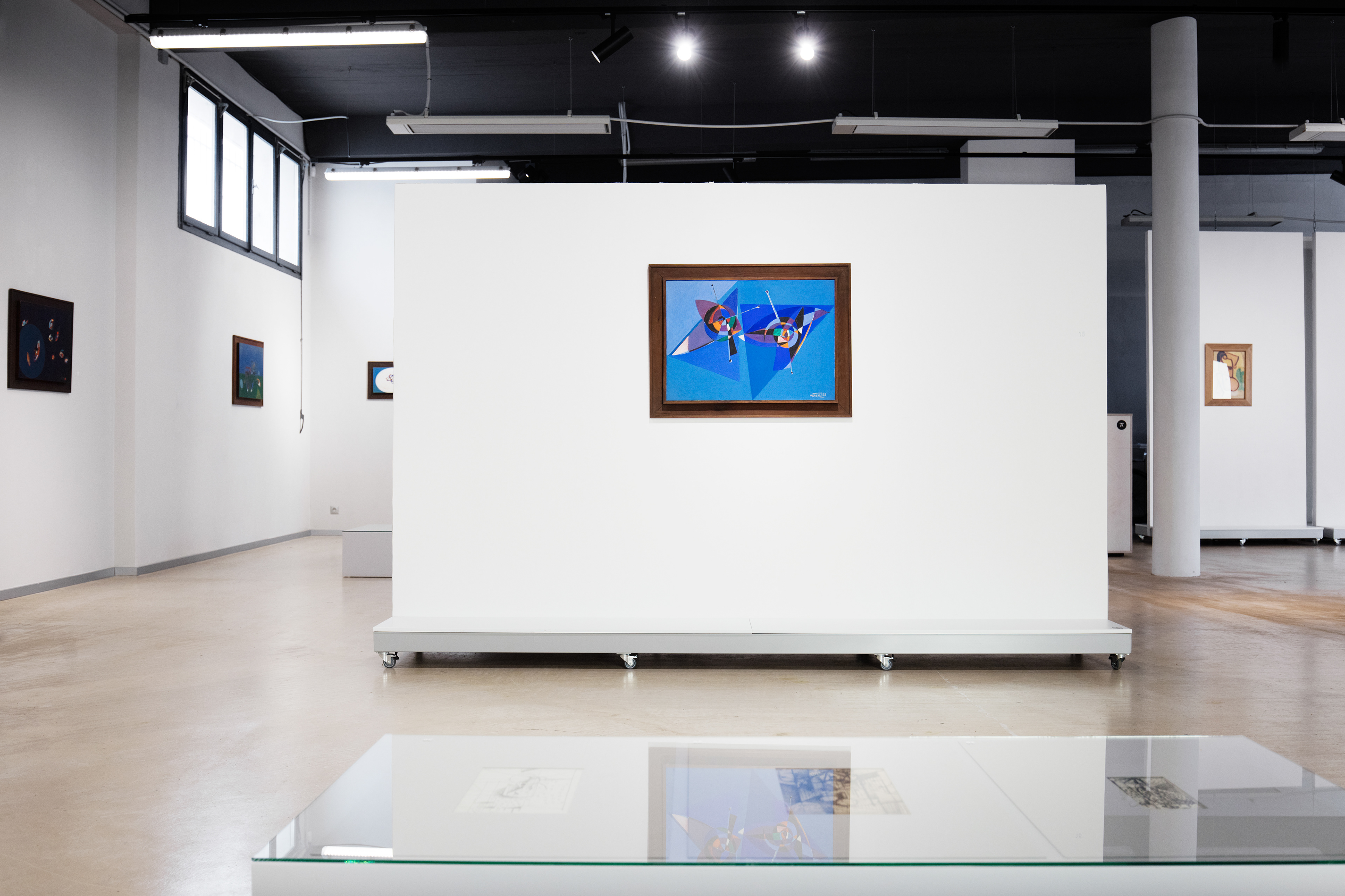
Výstava uspořádaná k výročí 30 let od úmrtí Bohumíra Matala upozorňuje na jednu z možných perspektiv, jak je Matalovo dílo možné interpretovat. Matador brněnské poválečné malby, známý především jako nejmladší malíř Skupiny 42, věnoval několik obrazů památce Jana Patočky (např. Čestná stráž u hrobu filosofa, 1977; Stráž u mrtvého, 1977; Rytíř, 1977) a zdá se, že i nazírání jeho tvorby optikou fenomenologie přináší mnoho zajímavých souvislostí.
Název výstavy proto odkazuje ke konceptu přirozeného světa, stěžejního tématu filozofie Jana Patočky, které rozvinul už v polovině 30. let. K tomuto konceptu se Patočka znovu vrátil v roce 1967, tedy ve stejné době, kdy Bohumír Matal začal malovat své první konstruktivně orientované obrazy z cyklu Přítomnost člověka. V návaznosti na Edmunda Husserla Patočka tvrdí, že přirozený svět je základem, ze kterého vyrůstá všechno ostatní. V současnosti jej ale překryla vědecká konstrukce, které přirozený svět neodpovídá. Člověk v této vědecké konstrukci světa nedokáže najít své místo, protože i on byl ve snaze o co největší objektivizování zpředmětněn. Věda, která zcela potlačila oblast duchovna, člověka pojímá jen jako jednu z věcí, která tak ztrácí i svou svobodu – tato myšlenka v době totality jistě velmi silně rezonovala. Pro poznání přirozeného světa je podle Patočky nutné sestoupit k nejzákladnější subjektivitě. Právě ze subjektivity se totiž utváří veškeré jsoucí, jejím prostřednictvím je svět formován.
V centru Patočkovy koncepce, stejně jako Matalovy tvorby, tedy stojí člověk, který je vždy nějakým způsobem vázán ke světu. Člověk je ve struktuře světa zakotven jako prostoročasová bytost, která se ke světu vztahuje prostřednictvím své tělesnosti. Podobně jako je podle Patočky nutné provést redukci, abychom se dostali k věcem samým, i Matal ve svých obrazech redukuje člověka na semiabstraktní ideogram, který je vetkán do geometrické sítě okolního prostoru. Za tímto ideogramem se vždy skrývá člověk – člověk jako korelát různých zážitků, stanovisek, zvyků apod., tedy fenomén, který může být různě variován, může nabývat různých podob, ale ve své podstatě zůstává stále člověkem. Matal tak koncem 60. let volně navázal na zásadní téma své tvorby 2. poloviny 40. let, na cyklus maleb a kreseb Člověk ve městě – město v člověku, který pak pod vlivem dobových reduktivních tendencí originálně rozvinul. Zkušenost s lyrickou a texturální abstrakcí z 1. poloviny 60. let mu pomohla uzavřít jednu etapu tvorby a v konstruktivně orientovaných obrazech z konce 60. let se více zaměřit i na smyslové kvality barev. V cyklu Přítomnost člověka tak barvu pevně sevřel do struktury obrazového prostoru, gradujícího v ústředních zhuštěných liniích, jejichž uspořádání vždy neomylně referuje k lidské postavě. Mezi postavou a prostorem v Matalových obrazech ale neexistuje žádná jednoznačná hranice: geometrizovaná strukturní síť postavami volně prochází a ve vzájemné souvztažnosti je také barevnost jednotlivých polí. Jistou paralelu tohoto pojetí lze přitom opět spatřovat v Patočkově koncepci přirozeného světa, podle níž je každý člověk charakterizován určitou škálou vnitřních stavů, nálad, které se periodicky střídají a zbarvují (sic) i naše okolní prostředí. V Patočkově koncepci tedy podobně jako v Matalových obrazech není člověk svým okolím určován pasivně, ale skutečnost si aktivně přisvojuje.
Představu absolutního netečného prostoru jako nehybného pozadí ostatně zrušilo už Einsteinovo relativistické pojetí prostoročasu, podle něhož každý objekt kolem sebe zakřivuje prostoročas a ten zase následně ovlivňuje další objekty. Ani z pohledu moderní kosmologie tedy nelze objekty oddělovat od struktury prostorových vztahů. Prostor neexistuje nezávisle na tělesech, ale je aktivním účastníkem fyzikálního dění. A ani v Matalových obrazech 70. let nemůže být člověk od svého prostředí zcela izolován. Člověk a jeho okolní prostředí se vzájemně ovlivňují a podmiňují, jsou součástí jedné a téže struktury.
Patočka dále zdůrazňuje, že prostředí člověka vytváří také intersubjektivita. S okolním prostředím i s druhými lidmi člověk interaguje a teprve v této interakci postihuje sám sebe. A mezilidský kontakt byl zcela zásadní i pro Matala a jeho tvorbu. Bohatá společnost přátel, kteří ho pravidelně navštěvovali – nejprve v jeho ateliéru na ulici Česká v Brně, později v jeho venkovském exilu na mlýně v Prudké – mu byla nevyčerpatelným zdrojem energie a inspirace, kterou transformoval v mnohosti forem svých maleb.
Do původně přehledné vertikálně-horizontální sítě Přítomností člověka Matal stále více zakomponovával velkorysé diagonální tvary, které celou kompozici dynamizují a evokují dojem pohybu postavy. Pohyb jako nejvlastnější podstata dění hrál opět zásadní roli i u Patočky, jenž chápe pohyb jako jeden z předpokladů subjektu – jeho prostřednictvím člověk ve světě je. Pohyb se takto demonstruje například v Matalových obrazech Ptačích herců, ve vířících segmentech tělesných schránek u Pomníků a Fragmentů, ale také v obrazech Vesmírných haraburdí, v nichž je základ geometrických útvarů často odvozen z analýzy pohybu postav viděných z ptačí perspektivy (v tomto malířském cyklu Matal zároveň poukázal na problém vesmírného odpadu, který začal být tematizován až mnohem později). Absence pohybu je naopak příznačná zejména pro Matalův cyklus obrazů Postavy ve zúženém prostoru, který reflektuje sílící existenciální tlak totalitního režimu – postavy jsou zde sevřené jednoduchou strukturou, která jim už žádný pohyb neumožňuje. V tomto prostoru jsou postavy od okolí izolovány, s prostorovou sítí už nejsou propojeny žádnými vektory, jako tomu bylo u předchozích cyklů Přítomností člověka a Ptačích herců. Je tedy zřejmé, že u Patočky ani Matala nejde o pouhý pohyb fyzický, nýbrž o pohyb existenciální, životní.
Matalovy malby tedy nelze chápat jako pouhou tvarovou interpretaci skutečnosti. V kontextu některých myšlenek fenomenologie i dobových fyzikálních a kosmologických koncepcí se ukazuje, že se v jeho tvorbě skrývá celá škála významů a malířských úvah o člověku, o vnitřní struktuře skutečnosti a o zakotvení člověka v prostoru současného světa. V imaginativním světě Matalových symbolů a metafor se spojuje poetická výpověď o člověku ve světě totality s geometrickým viděním světa a vynikajícím smyslem pro barvu a konstrukci tvaru. Původně jasně danou strukturu obrazové skutečnosti Matal postupně destruuje, fragmenty tělesných schránek se osamostatňují, seskupují se do nových útvarů a začínají žít vlastním životem. Někdy se přetaví do podoby vesmírných haraburdí jako svědků lidské přítomnosti v kosmu, jindy zase figurální tvary v jednolitém, bezčasém prostoru evokují prehistorické jeskynní malby. V centru pozornosti Bohumíra Matala však vždy stojí člověk, jakkoli v současnosti odcizený a roztříštěný. Vůči němu se struktura skutečnosti formuje.
Martina Mrázová
Organised to mark the thirtieth anniversary of Bohumír Matal's death, the exhibition offers one possible perspective on his work. A leading figure of post-war painting in Brno, best known as the youngest member of Group 42, Matal dedicated several paintings to the memory of Jan Patočka, including Guard of Honour at the Philosopher's Grave (1977), Vigil beside the Dead (1977), and The Knight (1977). Approaching his work through the lens of phenomenology may also reveal a range of illuminating connections.
The exhibition's title therefore refers to the concept of the natural world, a central concern of Jan Patočka's philosophy, which he began developing in the mid-1930s. Patočka returned to this concept in 1967, at the very time when Bohumír Matal began painting his first constructively oriented works from the series The Presence of Man. Following Edmund Husserl, Patočka understood the natural world as the fundamental ground of human experience, from which all other ways of understanding reality emerge. In the modern age, however, this world has become obscured by a scientific construction of reality that fails to correspond to our immediate lived experience. Human beings struggle to find their place within this scientifically constructed world because, in the pursuit of ever-greater objectivity, they themselves have been reduced to objects. In this critique of the scientific worldview, the spiritual dimension of human existence is suppressed, and the individual is treated as merely one thing among others, with a corresponding loss of freedom. Such an idea must have resonated particularly strongly under a totalitarian regime. For Patočka, an understanding of the natural world requires a return to the most fundamental level of subjectivity. It is through subjectivity that the world becomes meaningful and beings are disclosed to us.
At the centre of Patočka's philosophy, as in Matal's work, stands the human being, always bound to the world in some way. Human existence is rooted in the structure of the world as a spatiotemporal, embodied presence, relating to its surroundings through corporeality. A certain parallel may be drawn between the phenomenological pursuit of the things themselves and Matal's reduction of the human figure to a semi-abstract ideogram woven into the geometric network of the surrounding space. Yet behind this ideogram there is always a human being: a person understood through a multiplicity of experiences, perspectives, habits, and other aspects of existence. The figure becomes a phenomenon capable of assuming different forms while remaining recognisably human.
In the late 1960s, Matal thus returned, in a freely developed form, to a fundamental theme of his work from the second half of the 1940s: the series of paintings and drawings Man in the City – City in Man. He reinterpreted this earlier concern through the reductive artistic tendencies of the period. His experience with lyrical and textural abstraction during the first half of the 1960s helped him bring one phase of his work to a close and, in the constructively oriented paintings of the late 1960s, devote greater attention to the sensory qualities of colour.
In The Presence of Man, Matal confines colour within a firmly articulated structure of pictorial space, which intensifies towards a central concentration of lines whose configuration unmistakably evokes the human figure. Yet there is no clear boundary between figure and space in these paintings. The geometrised structural network passes freely through the figures, while the colours of individual fields also interact with one another. A parallel can again be found in Patočka's conception of the natural world, in which human experience is shaped by changing inner states and moods that also colour, as it were, our perception of the surrounding environment. In Patočka's thought, therefore, as in Matal's paintings, human beings are not merely passive recipients of external influences but actively engage with and make sense of reality.
The notion of absolute, inert space as an immobile backdrop to other phenomena had, moreover, already been challenged by Einstein's relativistic conception of spacetime, according to which matter and energy affect the curvature of spacetime, whose geometry in turn influences the motion of bodies. From the perspective of modern physics, therefore, material bodies cannot be considered entirely independently of the spatial relationships in which they exist. Space is not simply a passive container for physical events. Similarly, in Matal's paintings of the 1970s, the human figure cannot be entirely isolated from its environment. Human beings and their surroundings influence and condition one another; they belong to the same underlying structure.
Patočka also emphasises the role of intersubjectivity in shaping the human environment. We interact with our surroundings and with other people, and it is through these relationships that we come to understand ourselves. Human contact was equally fundamental to Matal and his artistic practice. The lively circle of friends who visited him regularly - first at his studio on Česká Street in Brno and later in his rural retreat at the mill in Prudká - provided an inexhaustible source of energy and inspiration, which he transformed into the varied forms of his paintings.
Matal gradually introduced increasingly expansive diagonal forms into the originally clear vertical and horizontal networks of The Presence of Man, lending the compositions greater dynamism and evoking the impression of a figure in motion. Movement, understood as fundamental to existence itself, also plays a central role in Patočka's philosophy. He conceives of movement as a fundamental dimension of human existence: it is through movement that human beings realise their being in the world.
This principle finds expression, for example, in Matal's paintings from the Bird Actors series, in the swirling segments of bodily shells in Monuments and Fragments, and in the works known as Space Junk. In the latter, the underlying geometric forms are often derived from an analysis of the movement of figures viewed from a bird's-eye perspective. In this series, Matal also drew attention to the problem of space debris, an issue that would become the subject of much wider concern only later.
The absence of movement, by contrast, is especially characteristic of Matal's series Figures in Confined Space, which reflects the mounting existential pressure of the totalitarian regime. Here, the figures are trapped within a simple structure that no longer permits movement. Isolated from their surroundings, they are no longer connected to the spatial network by the vectors that linked figure and environment in the earlier series The Presence of Man and Bird Actors. It is therefore clear that, for both Patočka and Matal, movement is not merely physical. It is also existential, bound up with the very unfolding of human life.
Matal's paintings cannot, then, be understood simply as formal interpretations of reality. Considered in relation to phenomenological thought and contemporary developments in physics and cosmology, his work reveals a rich spectrum of meanings and painterly reflections on the human condition, the inner structure of reality, and the place of human beings within the contemporary world. In the imaginative universe of Matal's symbols and metaphors, a poetic account of human existence under totalitarianism converges with a geometric vision of the world and an exceptional sensitivity to colour and the construction of form.
Over time, Matal progressively dismantles the initially clearly defined structure of pictorial reality. Fragments of bodily forms acquire an independent existence, gather into new configurations, and begin to lead lives of their own. At times, they assume the appearance of strange space debris, bearing witness to humanity's presence in the cosmos; elsewhere, figurative forms set within a continuous, timeless space evoke prehistoric cave paintings.
Yet at the centre of Bohumír Matal's attention there always remains the human being, however alienated and fragmented by contemporary existence. It is in relation to the human being that the very structure of reality takes shape.
Martina Mrázová